Can Wang Professor of Archaeology School of Archaeology, Shandong University Email shandawangcan@163.com |
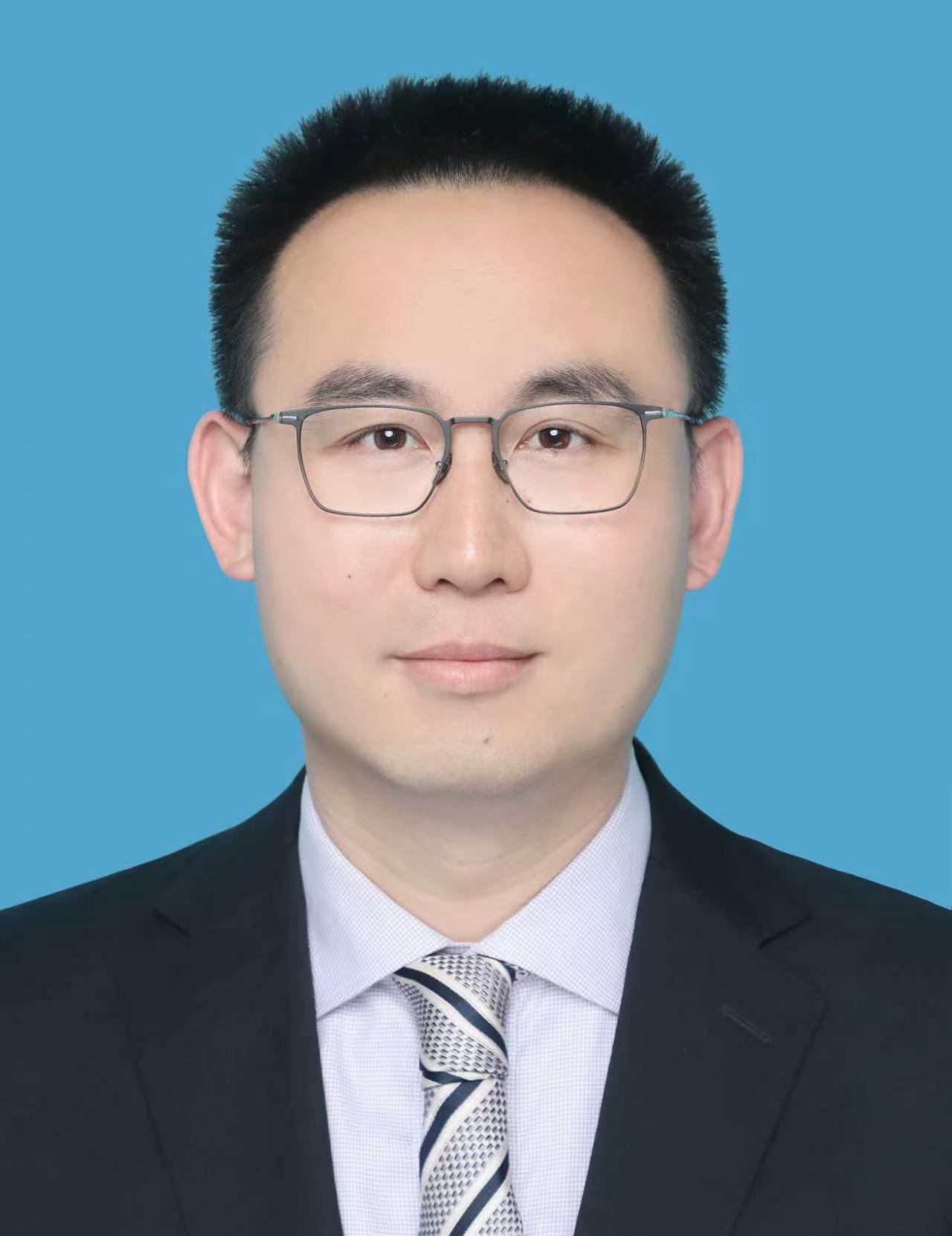 |
ACADEMIC PROFILE
Can Wang is a Professor at the School of Archaeology, Shandong University, and a recipient of the Taishan Scholar Young Expert award of Shandong Province and the Qilu Young Scholar distinction of Shandong University. His research focuses on archaeobotany, agricultural archaeology, and environmental archaeology, particularly the development of farming systems, plant resource use, and human–environment interactions in China from prehistoric to historical periods. He also investigates the relationships among agricultural development, subsistence strategies, and social complexity. His recent work combines multiple archaeobotanical proxies with digital datasets and artificial-intelligence approaches to archaeological research.
RESEARCH INTERESTS
• Archaeobotany and the evolution of farming systems. Crop assemblages, agricultural practices, and regional agricultural trajectories; the dispersal and use of millet, rice, wheat, and soybean.
• Agriculture, subsistence, and social complexity. Connections among food production, plant-resource use, settlement hierarchies, population dynamics, and early social development.
• Environmental change and agricultural adaptation. Climate variability, human adaptive strategies, and the resilience and transformation of ancient agricultural systems.
• Archaeobotanical methods and AI-assisted research. Charred plant remains, phytoliths, starch grains, stable-isotope analysis, archaeological plant datasets, and AI-assisted seed identification.
EDUCATION
2009–2016 Ph.D., Quaternary Geology Institute of Geology and Geophysics, Chinese Academy of Sciences
2005–2009 B.A., Archaeology Shandong University
ACADEMIC APPOINTMENTS
Sep 2025–Present Professor, School of Archaeology, Shandong University
Nov 2023–Aug 2025 Research Fellow, School of Archaeology, Shandong University
Feb 2020–Oct 2023 Research Fellow, School of History and Culture, Shandong University
Dec 2017–Jan 2020 Lecturer, School of History and Culture, Hebei Normal University
Feb 2016–Dec 2017 Postdoctoral Researcher, Laboratory of Cenozoic Geology and Environment, Institute of Geology and Geophysics, Chinese Academy of Sciences
SELECTED PUBLICATIONS
Recent publications and selected foundational studies. * Corresponding author.
1. Wu Yingying, Sun Zhaofeng, Zhang Zhaoyang, Cao Donglei*, Sun Huinan*, Wang Can*. Millet specialization and secondary settlements: How social inequality shaped agricultural resilience under late Holocene climatic stress in Neolithic China. Journal of Archaeological Science, 2026, 189: 106550.
2. Xing Rui, Cong Runmin*, Wu Yingying, Wang Can*, Tang Zhongming, Wang Fen, Wu Hao, Kwong Sam. Towards ancient plant seed classification: a benchmark dataset and baseline model. npj Heritage Science, 2026, 14: 538.
3. Wu Yingying, Wang Can*, Lu Guoquan*, Zhang Zhaoyang, Cao Donglei. Agricultural development in southern Shandong, northern China, from the Warring States to the Han dynasty: New archaeobotanical evidence from the site of the ancient capital city of Zhu State. Archaeological Research in Asia, 2025, 41: 100583.
4. Zhang Zhaoyang, Wang Can*, Wang Qiang*, Wang Fen, Yao Jingmin, Wu Yingying, Gao Hongru. Agriculture of the Late Dawenkou culture in the middle reaches of the Huai River, China: Archaeobotanical evidence from the Gaixia site. Archaeological and Anthropological Sciences, 2025, 17: 21.
5. Wu Qian, Wang Can*, Lu Qingyu, Wu Hao, Tang Zhongming, Wang Fen*. Plant diet and pottery vessels function at the Jiaojia site during middle-late Dawenkou culture in Shandong Province, China. Journal of Archaeological Science: Reports, 2025, 66: 105272.
6. Zhang Zhaoyang, Zhu Xuanbao, Wang Can*, Wang Qiang*, Wang Fen, Yao Jingmin, Gao Hongru, Xu Sensen. Phytolith evidence for rice cultivation and domestication in late-Dawenkou culture in the middle reaches of the Huai River, China. Journal of Archaeological Science: Reports, 2025, 65: 105184.
7. Xu Huiyu, Peng Qiye, Wang Wenjie, Wu Yuyao, Zhang Zhaoyang, Wu Yingying, Qin Youpeng, Wang Zimeng*, Wang Can*. Millet dominance and rice resilience at the Shang’s eastern frontier: Climate, cultural interaction, and agricultural adaptation (1300–1046 BCE). Journal of Archaeological Science, 2025, 178: 106225.
8. Wu Yuyao, Wang Can*, Song Yanbo*, Zhang Zhaoyang, Niu Yuqi, Liang Ruijuan, Zhao Jiaying. Micro-botanical evidence of plant food sources and stone tool functions at the Sujiacun site from the Longshan period in southeastern Shandong Province, China. Journal of Archaeological Science: Reports, 2024, 57: 104681.
9. Wang Can*, Lu Houyuan*, Zhang Jianping, Mao Limi, Ge Yong. Bulliform Phytolith Size of Rice and Its Correlation With Hydrothermal Environment: A Preliminary Morphological Study on Species in Southern China. Frontiers in Plant Science, 2019, 10: 1037.
10. Wang Can*, Lu Houyuan*, Gu Wanfa, Zuo Xinxin, Zhang Jianping, Liu Yanfeng, Bao Yingjian, Hu Yayi. Temporal changes of mixed millet and rice agriculture in Neolithic-Bronze Age Central Plain, China: Archaeobotanical evidence from the Zhuzhai site. The Holocene, 2018, 28: 738–754.
11. Wang Can*, Lu Houyuan*, Gu Wanfa, Wu Naiqin, Zhang Jianping, Zuo Xinxin, Li Fengjiang, Wang Daojing, Dong Yajie, Wang Songzhi, Liu Yanfeng, Bao Yingjian, Hu Yayi. The spatial pattern of farming and factors influencing it during the Peiligang culture period in the middle Yellow River valley, China. Science Bulletin, 2017, 62: 1565–1568.
MONOGRAPH
Wang Can and Lu Houyuan. Studies on the Origins of Agriculture and Human–Environment Relationships. Science Press, 2022. (In Chinese)
SELECTED RESEARCH PROJECTS
• 2027–2030 National Natural Science Foundation of China, General Program (42672005). Multi-proxy archaeobotanical study of regional agricultural differentiation and human–environment coupling in Shandong from the Eastern Zhou through Qin and Han periods. (Principal Investigator)
• 2026–2029 Natural Science Foundation of Shandong Province, General Program (ZR2026MS0538). Agricultural-system change and resilience from the Dawenkou to Yueshi periods at the Jiaojia site, northern Shandong. (Principal Investigator)
• 2024–2026 Shandong Provincial Social Science Planning Project (24CRWJ14). Agricultural development during key phases of the emergence of civilization in northern Shandong. (Principal Investigator)
• 2021–2024 National Natural Science Foundation of China, General Program (42072032). Carbonization temperatures of broomcorn and foxtail millet and their application to archaeobotany and agricultural archaeology. (Principal Investigator)
• 2018–2020 National Natural Science Foundation of China, Young Scientists Fund (41701233). Formation and development of mixed dryland–rice agriculture in the Central Plains during the early and middle Holocene. (Principal Investigator)
• 2022–2027 National Social Science Fund of China, Major Project (22&ZD248). Archaeological discoveries and integrated research at the ancient capital of Zhu State. (Subproject Leader)
• 2024–2029 National Cultural Heritage Administration, Archaeological Talent Revitalization Initiative (2024-270). The origins and early development of agriculture in the Huang–Huai–Hai region. (Subproject Leader)
HONORS AND DISTINCTIONS
2025 Qilu Young Scholar, Shandong University
2019 Taishan Scholar Young Expert, Shandong Province
2024 Archaeobotany designated a Shandong Province First-Class Undergraduate Course (course leader)
updated:2026.11.25


